82 Worcester St Unit C, North Grafton, MA 01536
Mon to Wed 8:30 to 5:00 / Thu by appointment / Fri 9:00 to 2:00
Call (508) 839-6464
Single Tooth Implant
A single tooth implant at Grafton Smiles, 82 Worcester St Unit C, North Grafton, MA 01536, replaces a missing tooth with a post and crown placed by Dr. Jasjit Sidhu, DDS, FICOI, without grinding down neighboring teeth. Open Mon to Wed 8:30 to 5:00, Thu by appointment, Fri 9:00 to 2:00. Call (508) 839-6464.
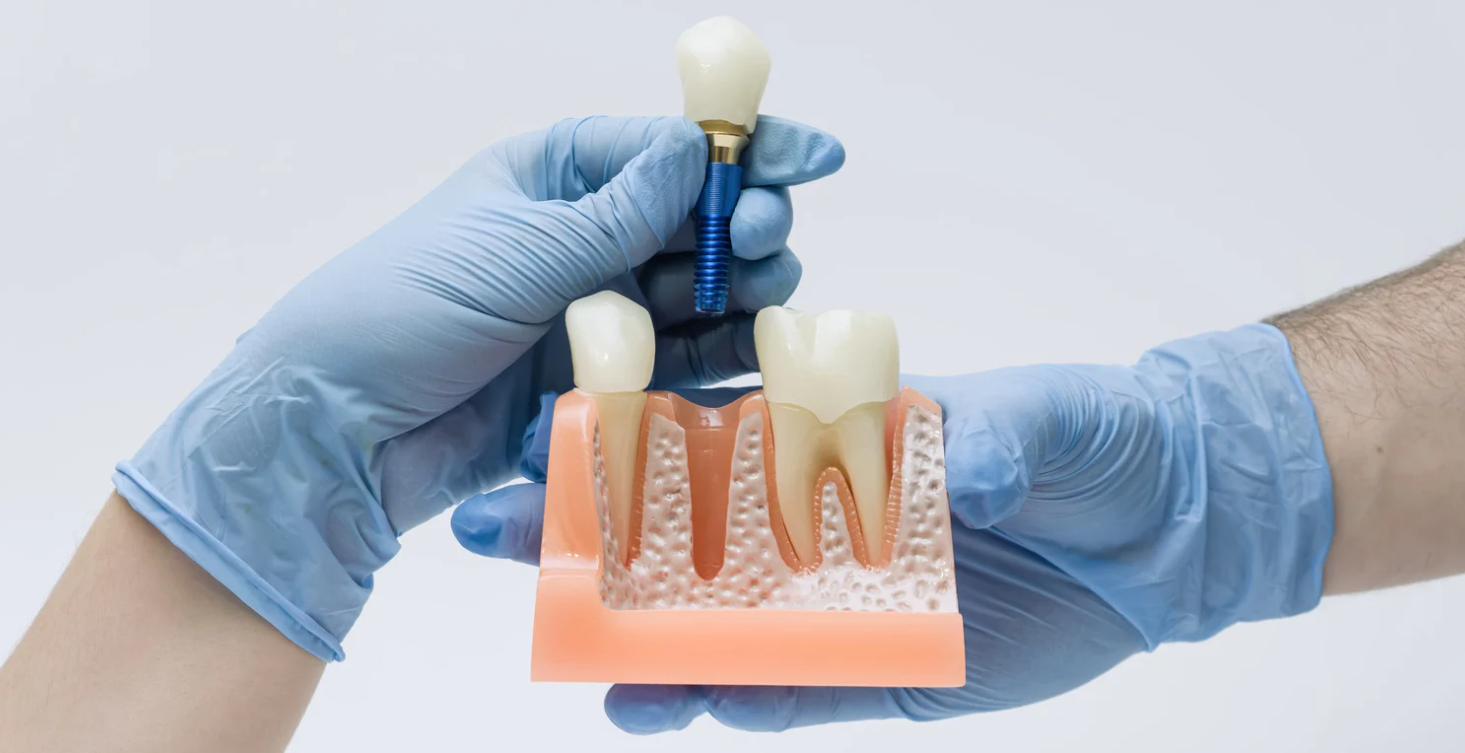
What I value most about a single implant is what it spares: the two healthy neighbors keep every bit of their enamel. A bridge borrows from those teeth forever. The implant borrows from nothing.
- Dr. Jasjit Sidhu, DDS, FICOI
One tooth, done right
Because a gap does not stay a gap. The neighbors drift into it, the tooth above or below over-erupts into the empty space, the bite shifts, and the bone under the missing tooth begins its slow shrink from disuse. A single tooth implant stops all four processes with one post and one crown, and it does so without touching the teeth on either side, which is its quiet advantage over a conventional bridge: a bridge borrows the neighbors as anchors and requires grinding them down for crowns, while an implant lets healthy neighbors keep their enamel.
The result is deliberately unremarkable. You brush it, floss it and chew on it like the tooth it replaced, and after a while most patients report forgetting which tooth it is. That forgettability is the goal of the whole exercise.
Your plan
| Variable | What we measure | How it changes the plan |
|---|---|---|
| Bone at the site | Volume and density on the cone beam 3D scan | Enough bone: place directly. Thin bone: graft first, then place |
| Timing after loss | How recently the tooth came out | Some sites suit placement soon after extraction; others heal first, then receive the post |
| Position in the smile | Front tooth vs molar | Front teeth get an esthetic temporary so you are never without a visible tooth; molars prioritize load strength |
Straight answers
Time is the honest cost: from placement to final crown typically runs several months, because the post must fuse with bone before it can chew, and no reputable office rushes that. Money is the other, and it is handled plainly: your insurance checked when you share your plan, the number in writing for the asking before anything is scheduled, and the implant cost guide available for plain-language orientation before you ever book.
After the crown goes on, the implant asks two things of you. Daily: brush and floss it like the tooth it replaced, with particular honesty at the gumline, because while the implant cannot decay, the gum around it can inflame exactly like gum disease and cost the post its bone if ignored. Yearly: keep the checkups, where the implant's bone level is tracked on X-ray and the crown's bite and contact points are checked, since a crown that starts catching food between itself and a neighbor is a five-minute adjustment early and a gum problem late. Treated this way, the post commonly outlasts everything else in the mouth around it.
One more honest note on waiting: the drift that follows a lost tooth is slow but compounding. Neighbors that have tipped into a gap for years sometimes need alignment before an implant can be placed in the space that remains, which adds time and cost that acting earlier would have avoided. If your gap is recent, that is the cheapest moment you will ever have to fix it.
The alternative worth taking seriously is a conventional bridge: faster and initially cheaper, at the price of reshaping two healthy neighbors and leaving the bone under the gap unloaded. Which trade is right depends on your neighbors' condition, your bone and your priorities; the implant vs bridge guide walks the decision honestly, and Dr. Sidhu will tell you plainly if your case is one where the bridge is actually the smarter buy.
Common questions
Plan on several months: the consultation and scan, the placement visit, a healing period of roughly three to six months while the post fuses with your jawbone, then the abutment and crown visits. Front teeth get an esthetic temporary during healing so you are never without a visible tooth. Faster protocols exist for some situations and the scan determines honestly whether yours is one. Call Grafton Smiles at (508) 839-6464.
Often, but not always, and the difference is what happens to the neighbors: a bridge requires grinding down the two adjacent teeth for anchor crowns, while an implant leaves them untouched and loads the bone so it does not shrink. A bridge wins on speed and upfront cost, and when the neighbors already need crowns anyway the arithmetic genuinely changes. We walk both paths with you before you choose. Call Grafton Smiles at (508) 839-6464.
Dr. Jasjit Sidhu plans and places them at the North Grafton office on the practice's own cone beam 3D imaging. He is a Fellow of the International Congress of Oral Implantologists, and the final crown is made to match your neighboring teeth in shape and shade so the replacement disappears into your smile rather than announcing itself. Call Grafton Smiles at (508) 839-6464.
Usually yes, though the years matter: bone shrinks where no root loads it, so long-standing gaps sometimes need grafting to rebuild enough bone to hold the post, which lengthens treatment but rarely rules it out. The cone beam scan measures exactly what remains and the answer you get is your anatomy's, not a sales script's. Call Grafton Smiles at (508) 839-6464.
It varies more than for any other treatment: many plans still class the implant post as elective while covering related parts such as the crown, the extraction or bone grafting, and some newer plans cover more. We check your specific benefits when you share your plan details, and you can see your estimated share in writing before anything is scheduled, with Cherry financing available. Call Grafton Smiles at (508) 839-6464.