82 Worcester St Unit C, North Grafton, MA 01536
Mon to Wed 8:30 to 5:00 / Thu by appointment / Fri 9:00 to 2:00
Call (508) 839-6464
Dental Implants
Grafton Smiles places dental implants at 82 Worcester St Unit C, North Grafton, MA 01536, from single tooth implants to All-on-X full arch, planned on cone beam 3D imaging by Dr. Jasjit Sidhu, DDS, FICOI. Open Mon to Wed 8:30 to 5:00, Thu by appointment, Fri 9:00 to 2:00. Call (508) 839-6464.
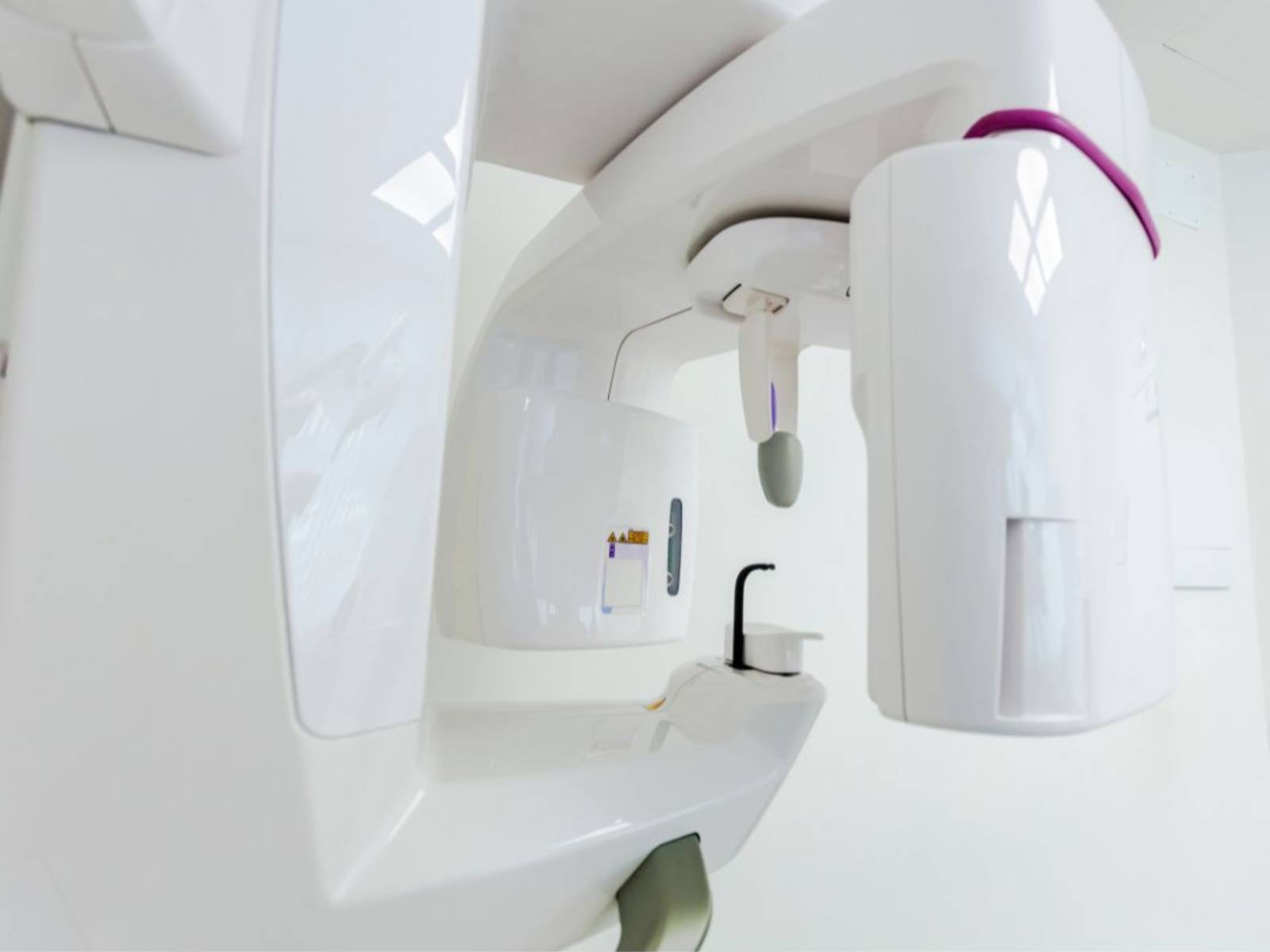
The first question in every implant plan is what the bone offers us. The cone beam scan answers that in millimeters before anything else is decided, and the written plan in your hands is built on that answer, never on optimism.
- Dr. Jasjit Sidhu, DDS, FICOI
The basics
A dental implant is a small titanium post placed in the jawbone where a tooth is missing. Over the following months it fuses with the bone - a process called osseointegration - and becomes a fixed anchor. A connector called an abutment attaches to the post, and the visible tooth, usually a crown, attaches to that. Three parts: root, connector, tooth.
The part most people have not heard is why the root matters. Jawbone stays dense because tooth roots load it every time you chew; when a tooth is lost, the bone beneath it begins to shrink from disuse. A bridge or a conventional denture replaces the visible tooth but not the load, so the bone keeps receding under it. An implant replaces the root, not just the tooth. That is why the bone stays.
Dr. Jasjit Sidhu plans and places implants at the North Grafton office. He is a Fellow of the International Congress of Oral Implantologists, an implant education and research organization founded in 1972, and every case starts with a cone beam 3D scan so the bone can be measured and the position planned before anything is decided - you see the same images we do.
The process
| Stage | What happens | Typical timing |
|---|---|---|
| Consultation and scan | Cone beam 3D scan, bone assessment, a plan you can see, and the cost available in writing before you decide anything | One visit |
| Placement | The titanium post is placed in the jaw under local anesthetic; most patients are surprised how routine the appointment feels | One visit |
| Healing | The post fuses with the bone. You leave with the site protected and clear aftercare instructions | Roughly 3 to 6 months |
| Restoration | The abutment and the final crown, bridge or denture attachment are fitted and adjusted | One to two visits |
Your options
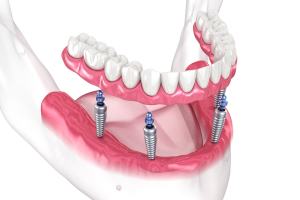
One missing tooth is usually a single tooth implant - one post, one crown, and the healthy neighbors are left untouched, which is the main advantage over a conventional bridge. Several missing teeth in a row can be carried on an implant-supported bridge, where two posts hold a span of teeth. A loose or unwearable denture can be stabilized with implant retained dentures that snap onto posts instead of resting on the gum. And a full arch can be replaced with All-on-X, a fixed bridge for the whole upper or lower jaw carried on a small number of implants.
Honesty about candidacy: implants need enough healthy bone to hold them, and not everyone starts with it. The scan settles that question, not guesswork. Where bone has receded, grafting can often rebuild it, which lengthens treatment but does not usually rule it out. Healing is slower and failure risk higher for heavy smokers and for uncontrolled diabetes, and we will tell you plainly if your situation stacks the odds badly rather than sell you a procedure. And if a case is beyond what should be handled in a general practice, it goes to an oral surgeon - we would rather refer than improvise.
On cost: implant treatment is priced by the case, because one post and one crown is a different project from a full arch. Ask for the number in writing before you decide, and for a walk through what your plan covers - see implant financing and insurance, or the plain-language implant cost guide.
After the crown
An implant cannot get a cavity, but the gum and bone around it can still get sick. The condition, peri-implantitis, behaves like gum disease around a natural tooth: plaque builds at the gumline, the tissue inflames, and untreated it can cost the implant its bone support. The defense is unglamorous and completely effective for most people: brushing twice a day, cleaning between teeth, and keeping regular hygiene visits where the implant is checked and cleaned professionally. An implant is a reason to keep dental visits, not a graduation from them.
It is also worth knowing what can go wrong, because a practice that only talks about success rates is not telling you the whole story. Early failures, where the post does not fuse, are uncommon and usually show up in the first months; smoking and uncontrolled diabetes raise that risk, which is why we raise them with you before placement rather than after. Late problems are usually either the gum condition above or mechanical, a loosened screw or a worn crown, both of which are repairable without losing the implant when caught at routine checkups.
The temporary phase deserves a plain answer too, because "what do I eat for three months" is the question people are embarrassed to ask. For most single implants you eat normally within days, simply favoring the other side while the site settles; the healing implant sits under the gum or under a temporary and is not doing chewing work yet. Full arch cases follow a softer-food progression that we map out for you visit by visit. Nobody leaves this office wondering what they are allowed to have for dinner.
This is also why implant treatment here is planned rather than sold. The cone beam scan, the staged timeline, the honesty about bone and healing: each exists to stack the odds so the implant you get at this office is still working for you decades from now. If you already have an implant placed elsewhere and want it examined or maintained, that is welcome too.
Why here
Not the brand name on the treatment, which varies by marketing more than by medicine, but four checkable things. Who plans and places the implant, and what implant education sits behind them: here it is Dr. Sidhu, a Fellow of the International Congress of Oral Implantologists. What the plan is built on: here, a cone beam 3D scan of your own anatomy, taken in this office, shown to you. What you hold before deciding: here, a written plan with its pricing and timeline. And what happens when your case is not a fit: here, a straight referral with the reasoning explained. Ask any office those four questions, including this one, and the answers will tell you more than any before-and-after gallery.
Common questions
The placement is done under local anesthetic, and most patients report it feels more routine than they feared - closer to a filling appointment than to surgery as they imagined it. Expect soreness for a few days afterward, managed with ordinary pain relief. What we will not do is promise a pain-free experience, because honesty matters more than marketing; what we can promise is anesthetic that is not rushed. Questions? Call Grafton Smiles at (508) 839-6464.
Plan on several months from placement to final tooth, because the post has to fuse with your jawbone before it can carry a crown, and rushing that stage is how implants fail. Typical healing runs three to six months, with the consultation, placement and restoration visits around it. Some situations allow faster protocols; the scan determines that honestly. To have your case assessed, call Grafton Smiles at (508) 839-6464.
Dr. Jasjit Sidhu plans and places implants at the North Grafton office. He is a Fellow of the International Congress of Oral Implantologists, an implant education and research organization founded in 1972, and every case is planned on a cone beam 3D scan taken here rather than estimated from a flat X-ray. Cases that belong with an oral surgeon are referred, and we tell you which is which. Call Grafton Smiles at (508) 839-6464.
The implant post itself, once successfully fused, commonly lasts decades and often the rest of a patient's life with ordinary care - which means brushing, flossing and regular checkups, since implants can still lose bone to gum disease even though they cannot decay. The crown on top is a wear part and may need replacement after ten to fifteen years. For a candid assessment of your case, call Grafton Smiles at (508) 839-6464.
Most healthy adults with a missing tooth are, but the honest answer comes from a cone beam 3D scan of your jaw, not from a website. The scan measures whether there is enough bone, whether grafting would be needed first, and where the post can safely go. Heavy smoking and uncontrolled diabetes lower success rates, and we will say so plainly. To book an implant consultation, call Grafton Smiles at (508) 839-6464.